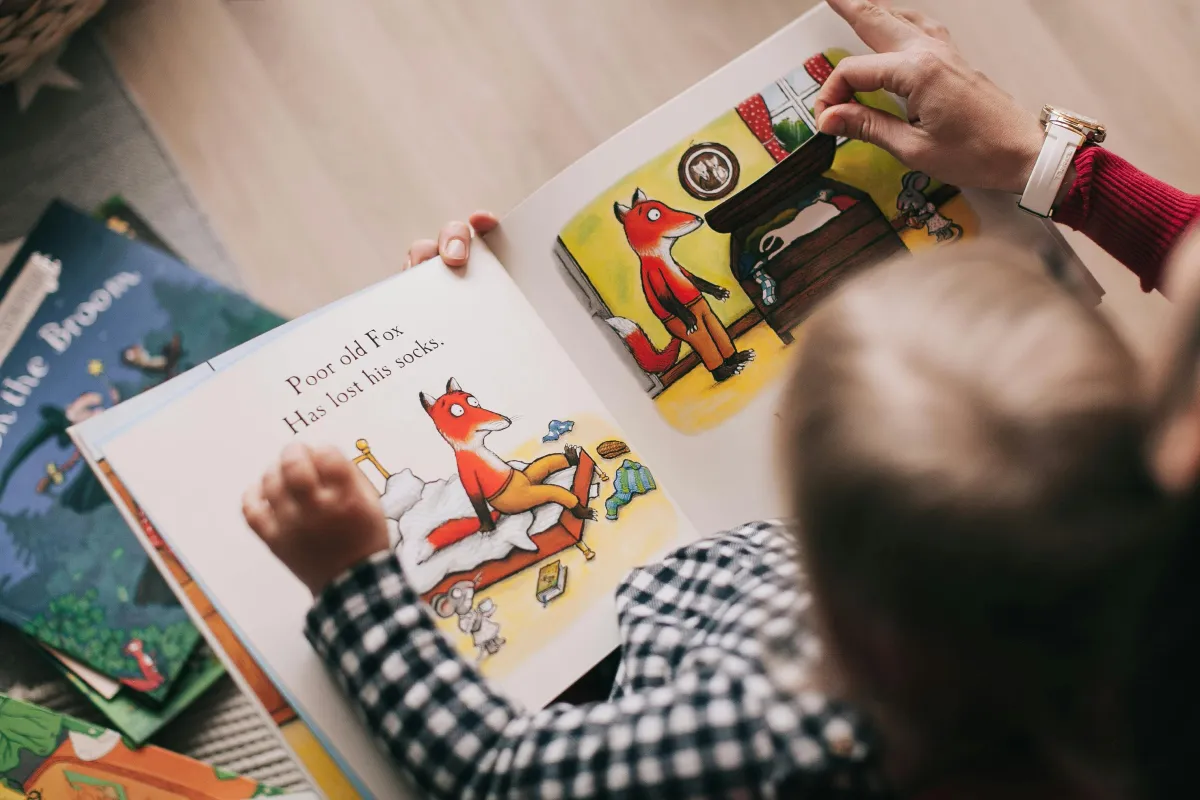
Are still images better for a kid’s brain than moving ones? MRI research suggests that picture books activate language, imagination and understanding together in a way that cartoons do not.
Much of today’s children’s media is animated and visually busy. Yet evidence suggests that quieter formats may be better for young brains. Picture books, with simple illustrations and spoken stories, appear to activate brain regions for language, imagination and understanding together. Cartoons, by contrast, draw attention to the moving images, without engaging these systems in the same way.
What did the brain scans show?
This insight comes from MRI research at Cincinnati Children’s Hospital, reported by NPR. In the experiment, children aged 3 to 5 heard the same story in three ways: audio only, a picture book with audio and a fully animated cartoon. The picture book stood out. The still images supported the story without taking over, so children had space to imagine, anticipate and make sense of what they heard. That extra mental work seems to help the brain build stronger links.
“A simple picture book invites the brain to join in.”
Why does the pace of kids’ video matter?
In real life, parents cannot always sit down with a book, and many will offer their child some screen time instead. However, much of the screen content made for children is fast, loud and packed with quick cuts. It is designed to grab kids’ attention, and this can easily overwhelm the very processes children need to develop.
Can screen time work more like a picture book?
The good news is that screens do not have to work this way. Slow, gentle, story-led videos can offer something closer to the picture-book experience, giving children room to make connections themselves. They can make screen time feel more like a quiet moment with a story. But this only works on platforms that avoid autoplay and are not built to keep children hooked.