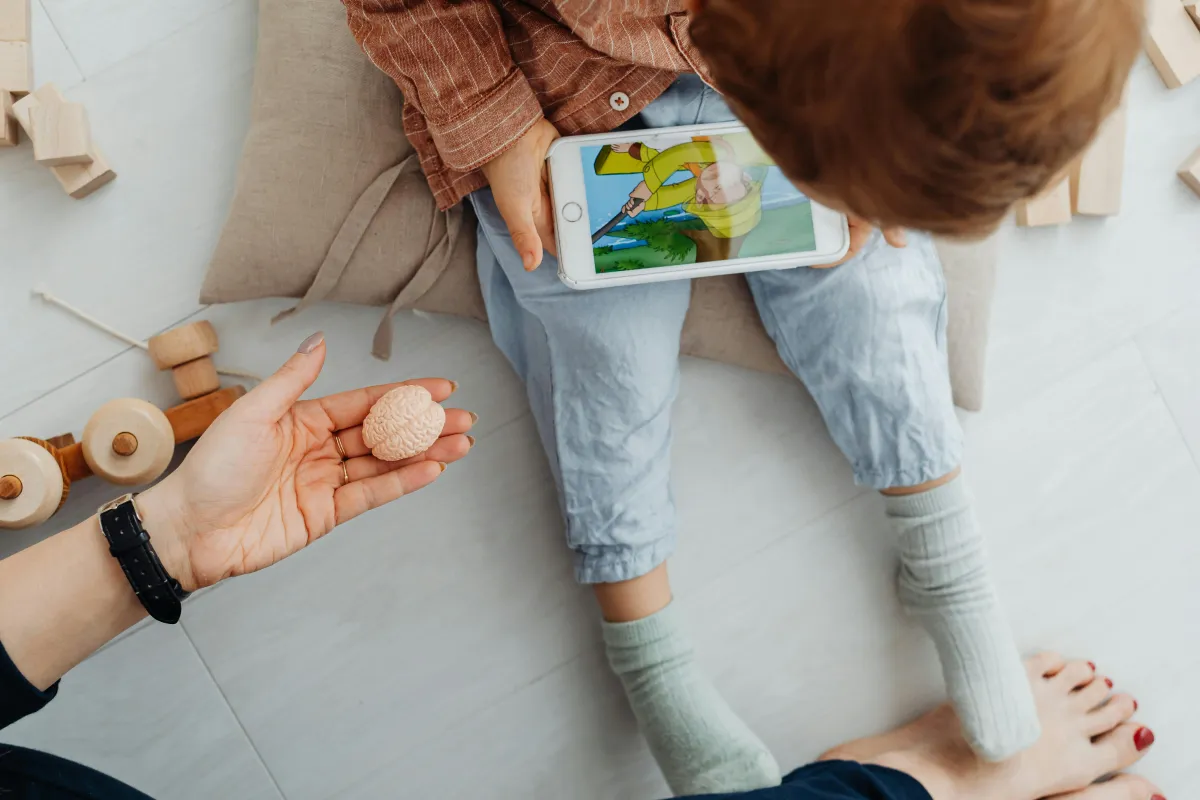
Can screen time reshape the preschool brain? MRI research suggests that preschoolers with heavier screen use show differences in the brain networks that support language and early learning.
Screens are now part of daily life for very young children. A 2025 US survey of over 3,000 parents found that eight in ten children between two and four regularly watch YouTube. Many spend hours a day on screens. For busy parents, this can feel practical, even necessary. But heavy screen use is not without potential downsides.
What do MRI scans show?
A 2019 study published in JAMA Pediatrics found that preschoolers who spent more time on screens showed differences in the brain regions linked to language and early learning. Using MRI scans, researchers observed that children with heavier screen use had weaker connections in these regions and also scored lower on simple tests of language and early literacy.
Do screens actually change the brain?
The researchers are careful. They do not say screens directly change the brain. But the results suggest that when screens take up too much space, something else gets crowded out. Young children learn language through conversation and shared attention. They develop empathy by watching faces and joining play. When long stretches of screen time replace these everyday moments, the developing brain may get less of the practice it needs.
“Extended screen time may impact the brain systems supporting language and literacy skills.”
What does other research say?
Other research points in a similar direction. A 2023 study, published in the same journal, linked higher screen exposure in infancy with differences in brain activity and later executive function. Another found that more screen time at an early age was associated with later delays in communication and problem solving. Together, these findings do not call for alarm. They call for balance.
What can parents actually do?
For parents, that balance is hard to strike. The challenge is not the screen itself, but the way most children’s media and platforms are designed. Rapid pacing keeps young brains hooked, while autoplay and endless feeds keep videos rolling. Children do not need help staying engaged; they need help getting off. That is why Meevee is developing an alternative platform, one that slows the pace, avoids autoplay and offers clear signals when screen time is over. This makes it much easier for children to step away from the screen.